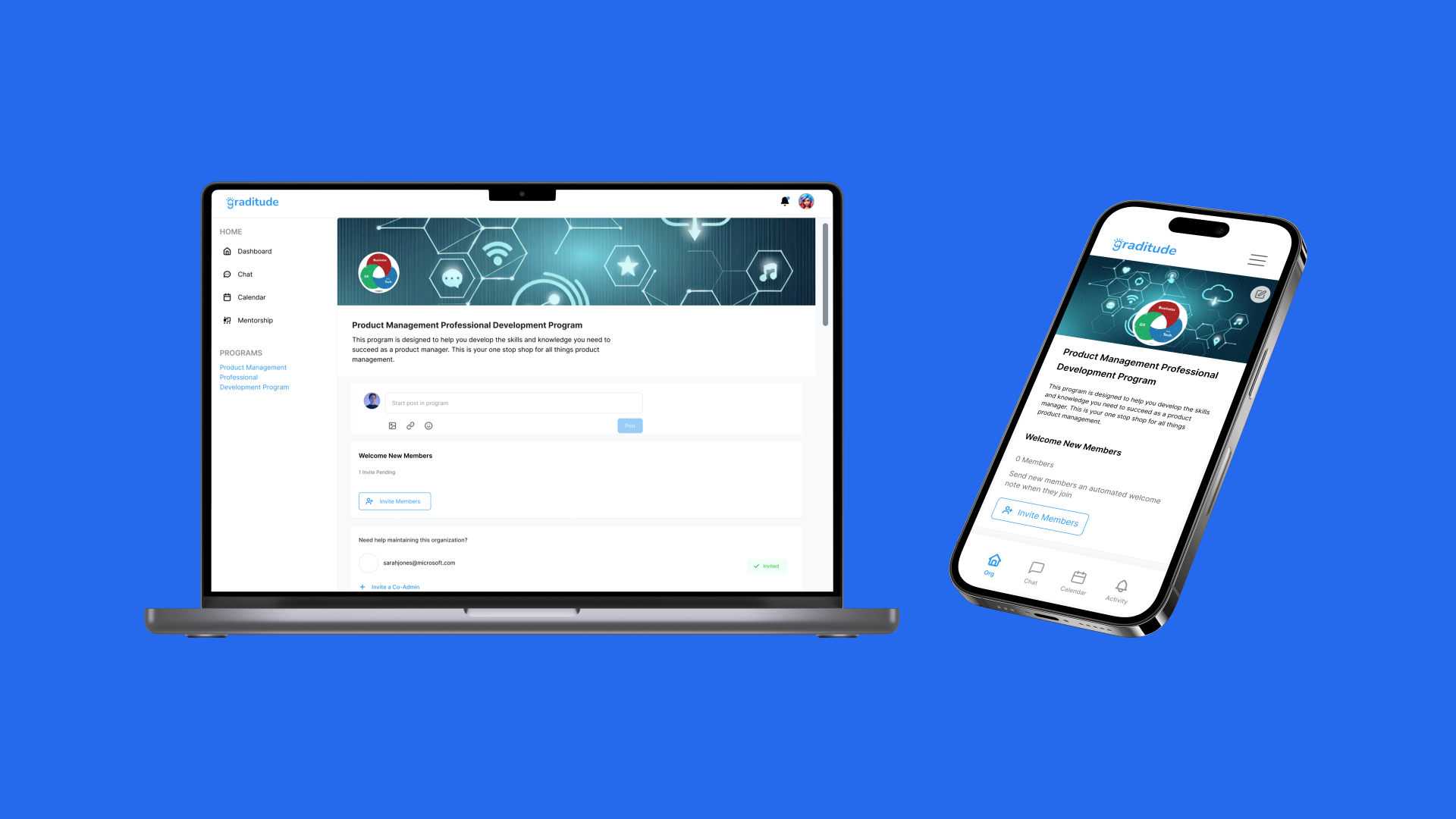
Empowering student leaders to spark networks.
Designed and launched a 0–1 user flow for Graditude's org join & creation feature, enabling student leaders to build mentorship-driven communities and facilitate career development opportunities within the platform.
My Impact
33% increase in user completion rates after implementing a progressive disclosure flow. Launching to 1,500+ students across universities in 2026.
Our Problem: Student leaders did not have a place or support to launch mentorship programs.
Student leaders and administrators relied on manual outreach and fragmented organization tools to create mentorship programs.
The solution: An organization creation flow that makes it easy for student leaders to create places to facilitate mentorship right on Graditude's platform. This flow had to be simple and intuitive to account for student leaders' need for efficiency.
Three non-negotiables shaped the design.
After reviewing the PRD, three core requirements needed to drive every design decision.
Student leaders must be able to easily create an organization
Avoid duplicate organizations
Make organizations findable to members
User Research
Since this is an admin/student-leader facing feature, we started by interviewing a focus group of five student leaders to understand what they look for when creating organizations on platforms like Instagram, LinkedIn, or Facebook.
Want a clear outline of the steps they're going to go through before starting the flow.
Want to save drafts and come back later — most won't finish setup in one sitting.
Want to both mass and individually invite people who might share a relevant major.
Information Architecture
After conducting user research, we created a simple user flow to guide our lofi designs.
- Set Org Name
- Select University
- Target Industry
- Add banner
- Write Description
Our first attempt at organization creation.
The initial flow walked admins through a multi-step form, starting with university selection so students from that school could find the organization later. A stepper on the side gave users a clear sense of progress.
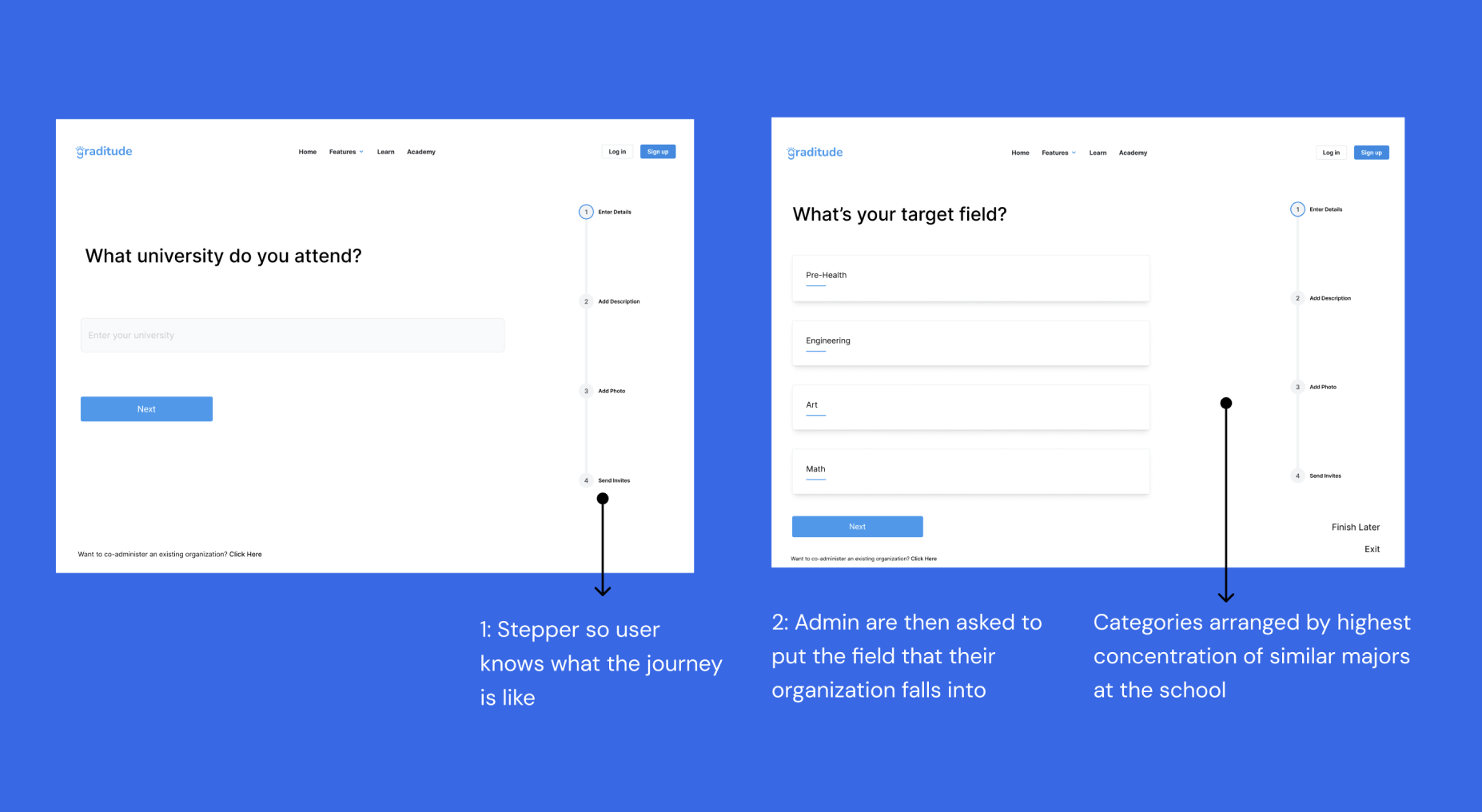
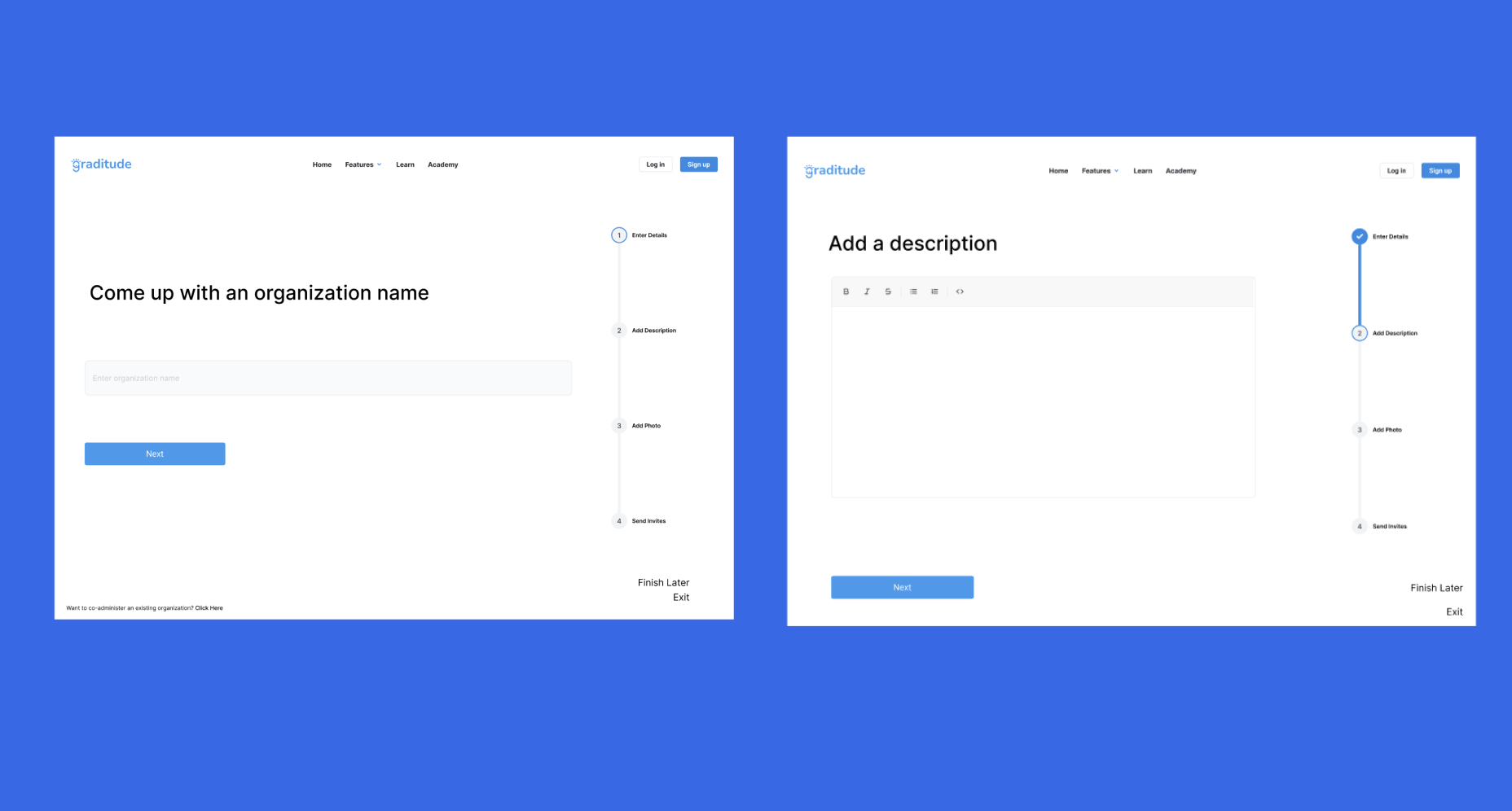
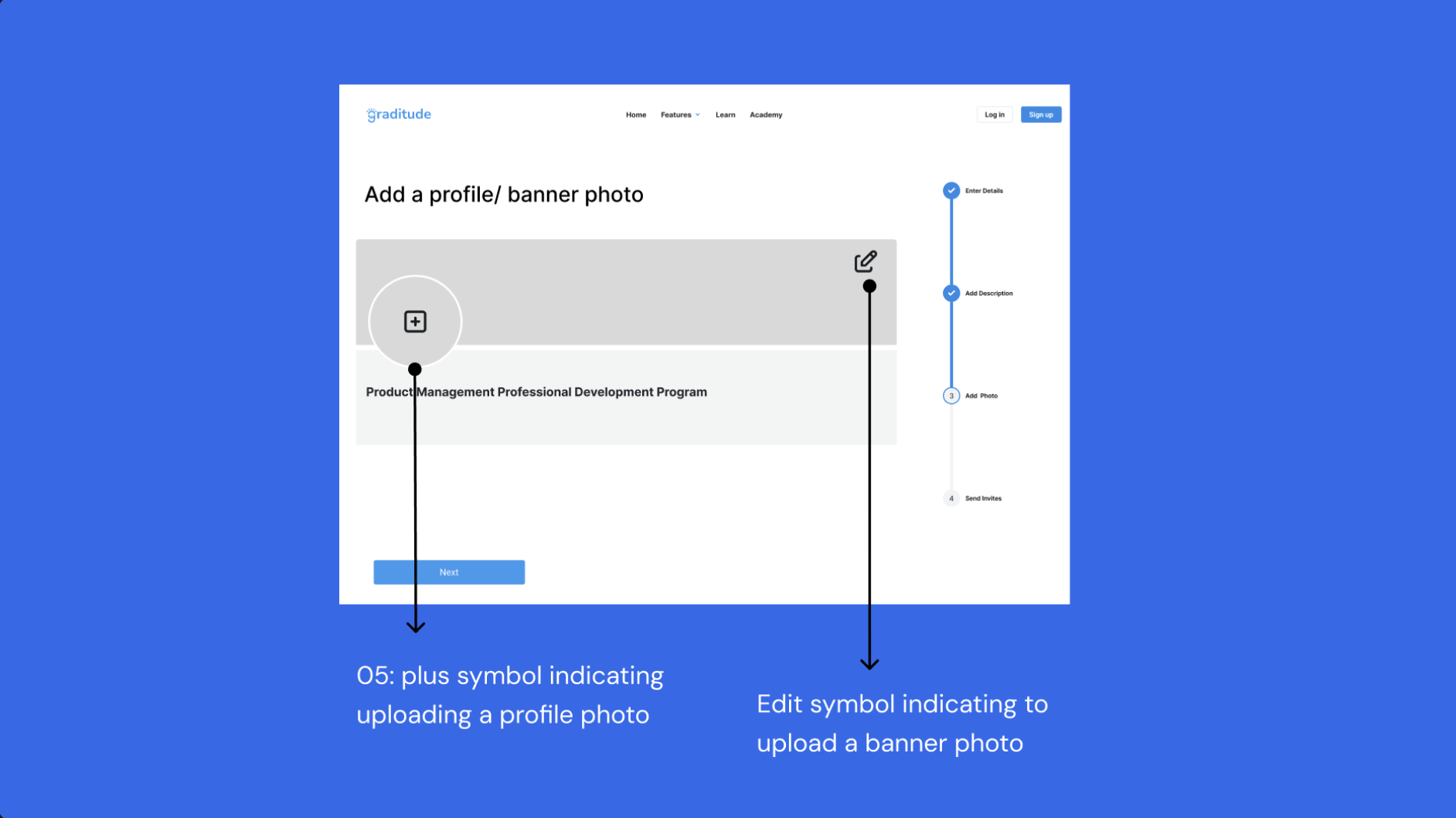
Our first iteration created a flow where the user would be asked to build their entire organization profile in one go.
Re-envisioning the solution from user feedback.
After a meeting with Graditude stakeholders and testing with a focus group of five users, two concerns reshaped how we viewed this product.
Lack of holistic visibility
Users needed a clearer sense of how their profile would look as a whole. The step-by-step flow prevented them from previewing their completed profile until the very end, reducing motivation and context.
Potential for decision fatigue
The onboarding survey's length risked overwhelming users, leading to drop-offs before completion.
So how do we solve this? Two words — progressive disclosure.
Progressive disclosure split the flow into two parts.
I implemented a progressive disclosure flow rather than a survey flow to balance clarity with simplicity by breaking down the long survey into manageable steps to prevent decision fatigue, while introducing preview moments that gave users a clearer sense of how their complete profile would come together.
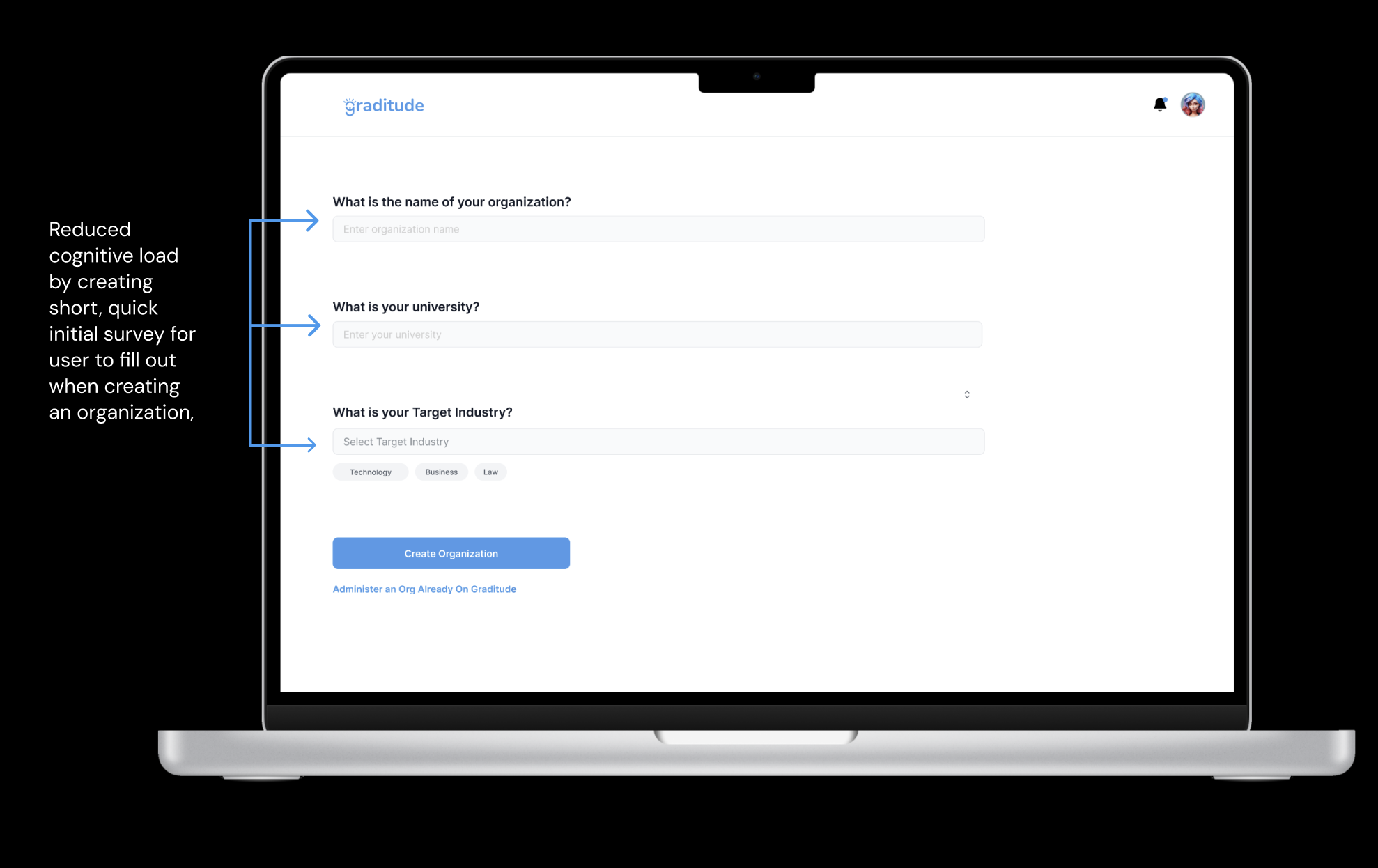
A short initial survey
To start the user off, we begin the onboarding flow with three quick questions in order to place the organization within a school and industry. This gets the important information out of the way while reducing cognitive load.
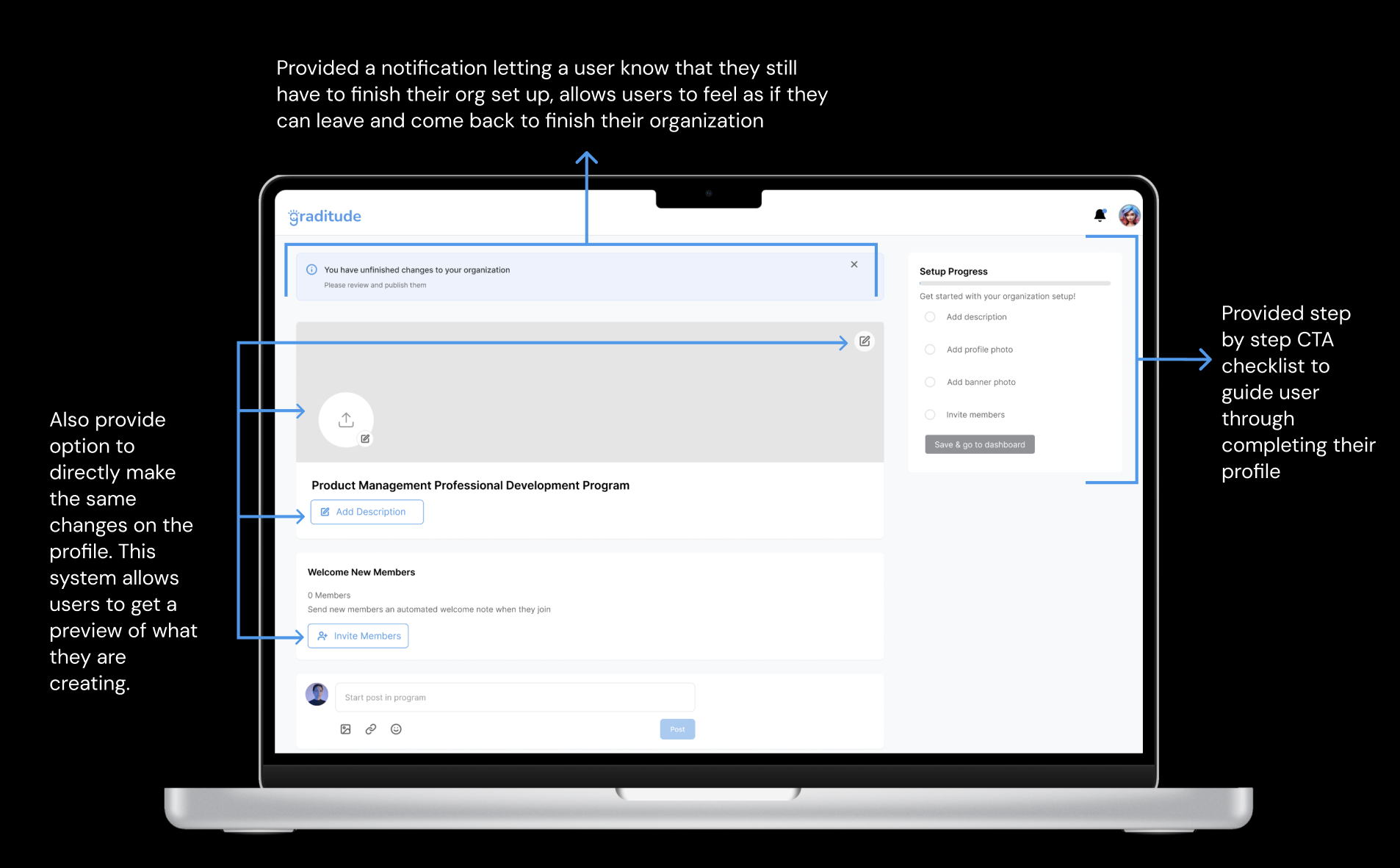
A buildable, progressive-disclosure profile page
Once the survey is complete, the user lands in an account preview view and is guided to complete the profile. The user can choose to leave and return if they wish, with steps clearly outlined and easy to find.
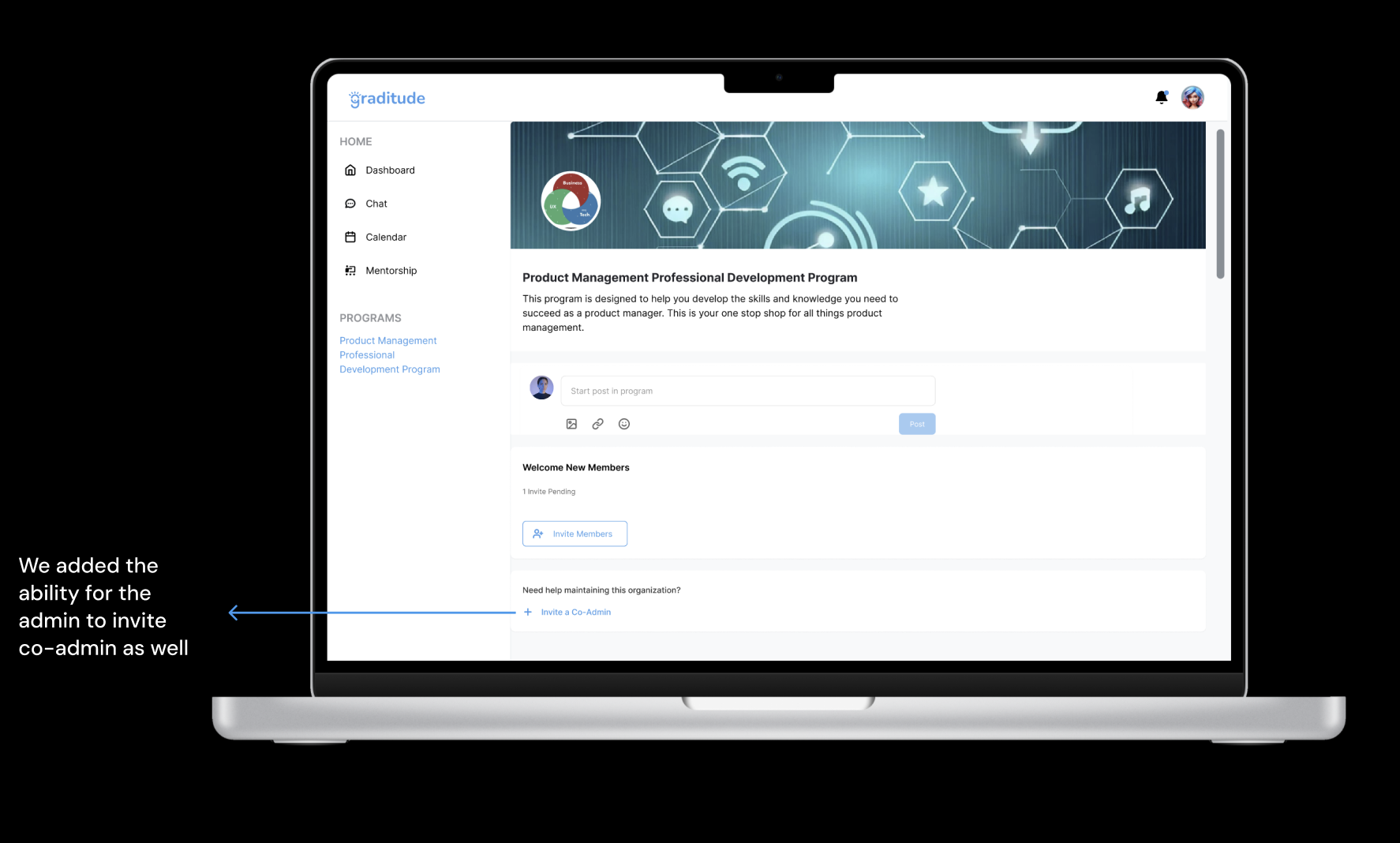
Invite a co-admin flow
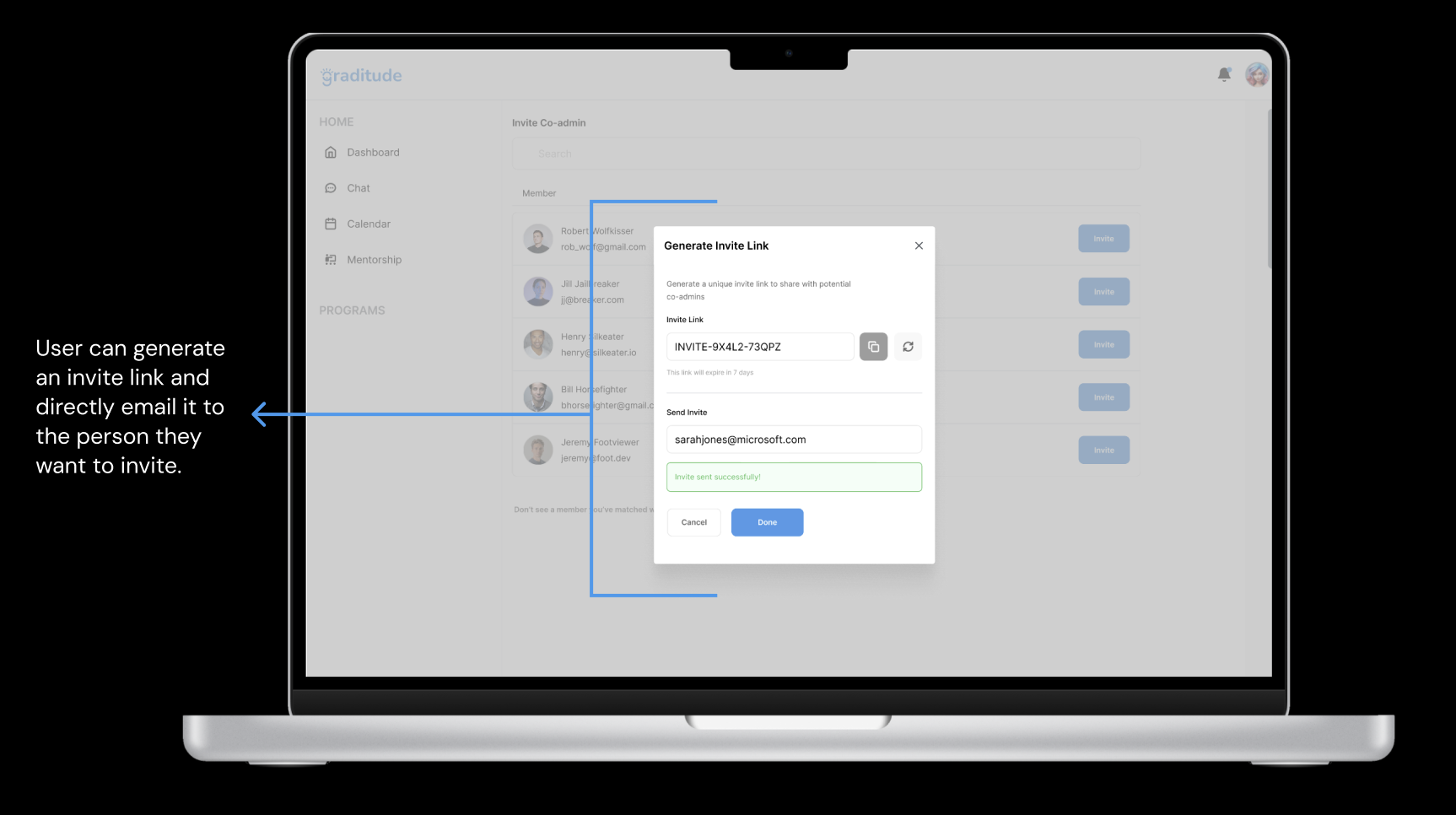
Based on user testing feedback, we added an "invite a co-admin" feature to the progressive disclosure profile. We implemented a generate-invite-code feature to invite members not yet on Graditude. This was important since Graditude is launching at MVP, and we wanted to encourage as many sign-ups as possible.
The results of implementing progressive disclosure.
"It is much easier understanding what the task is by being able to slowly build on it."
— UCSC Design Leader"I like how I can have some of the profile set up already, and I can leave and come back to it."
— UCSC StudentGraditude's MVP rolls out in 2026.
Graditude's MVP will be rolling out to universities starting in 2026. Over 1500 students will be using it.
Our hope with Graditude is that we will be able to revolutionize the way student mentorship programs run. Rather than fragmented, short-term mentorship opportunities, we hope to garner long term, career altering mentorship relationships.